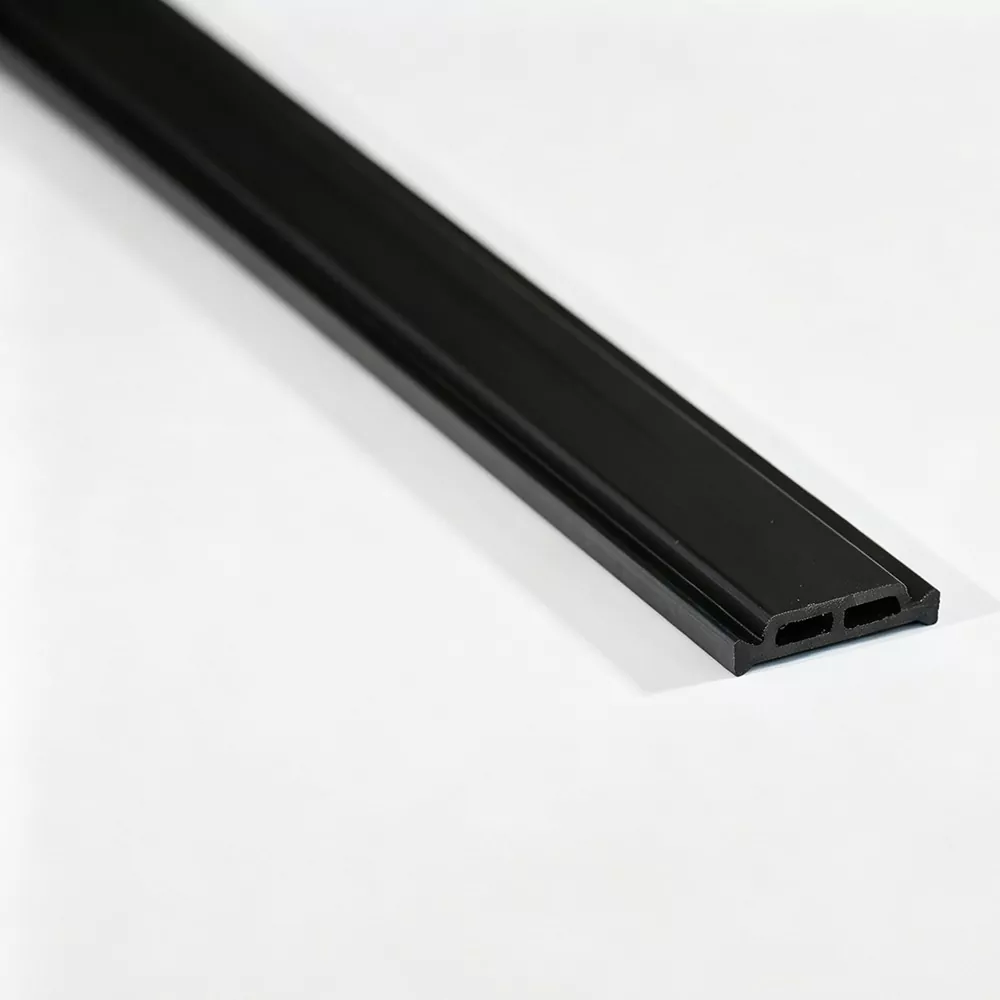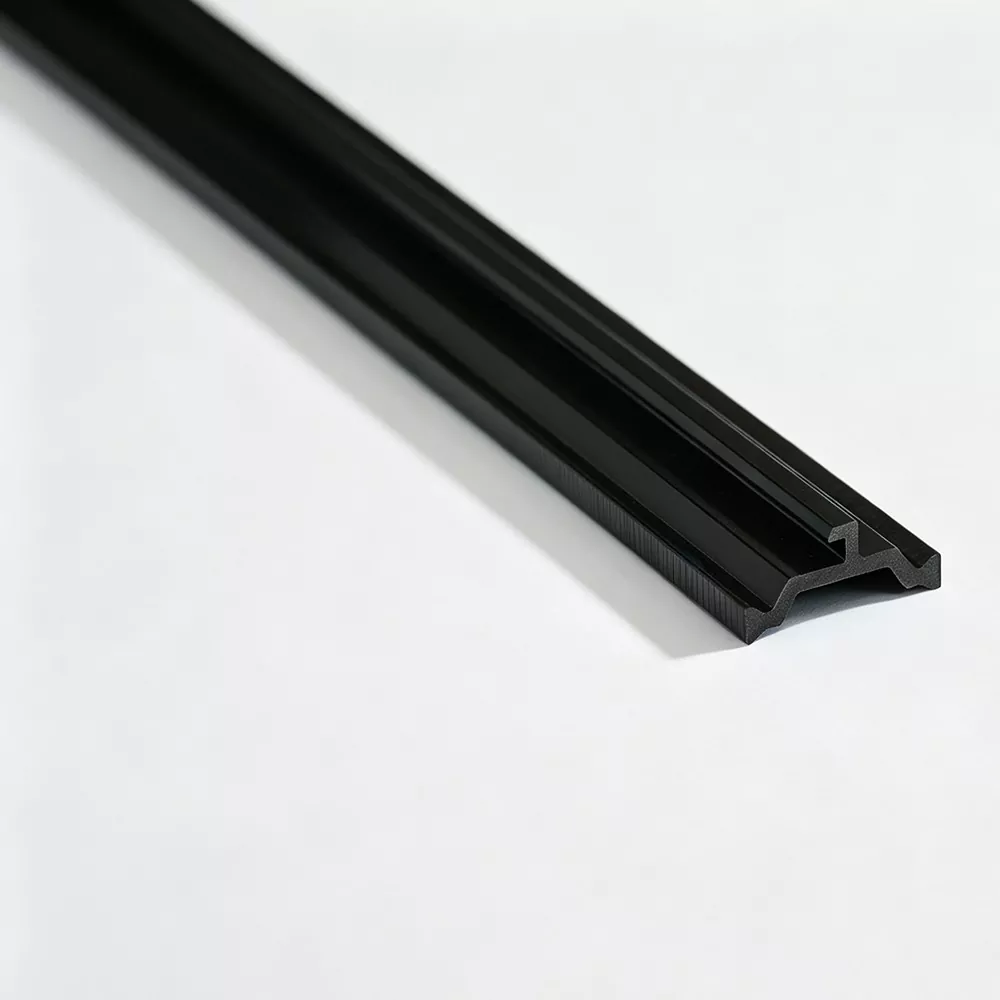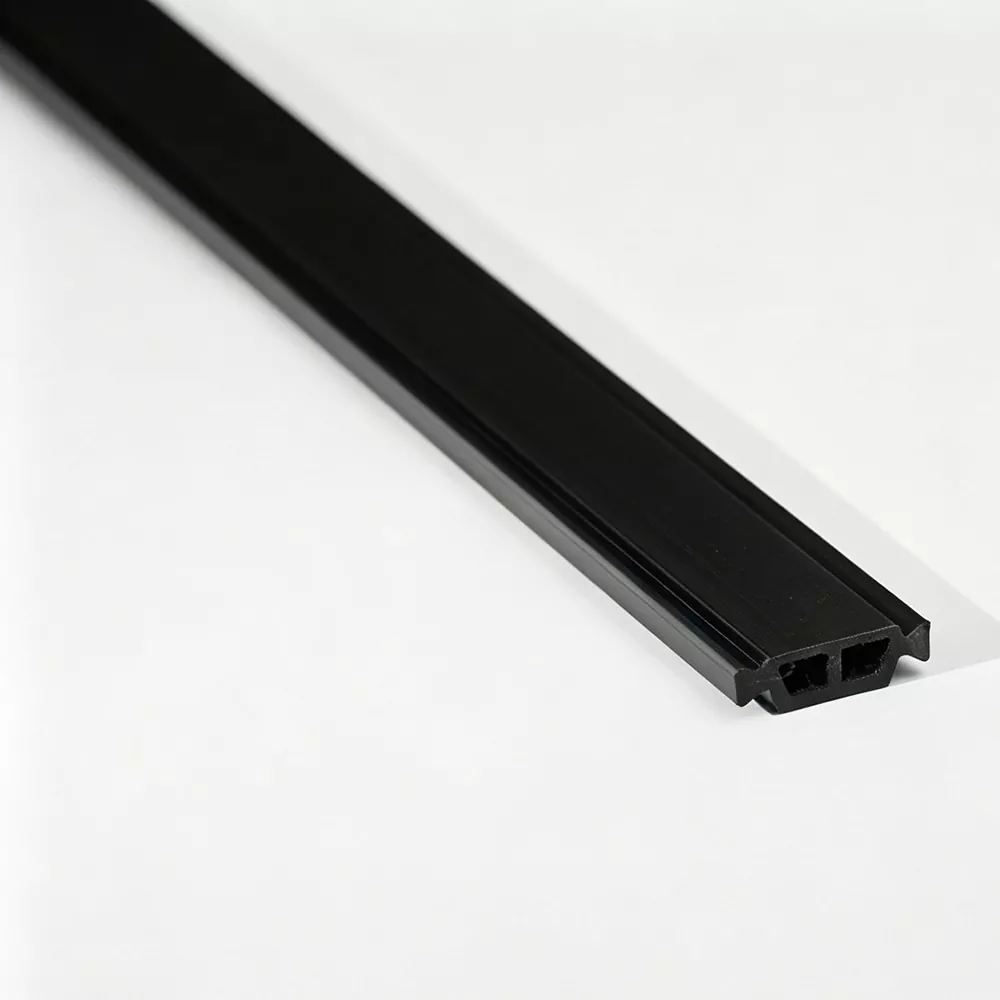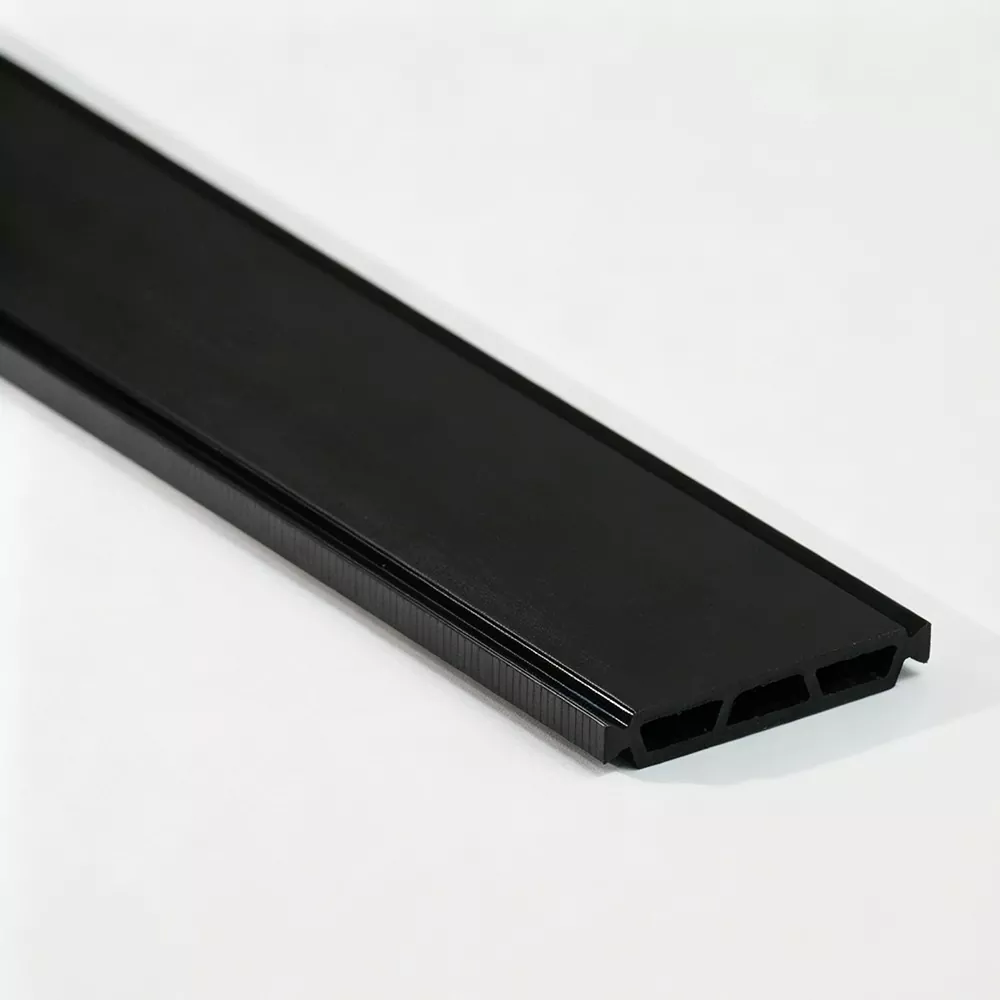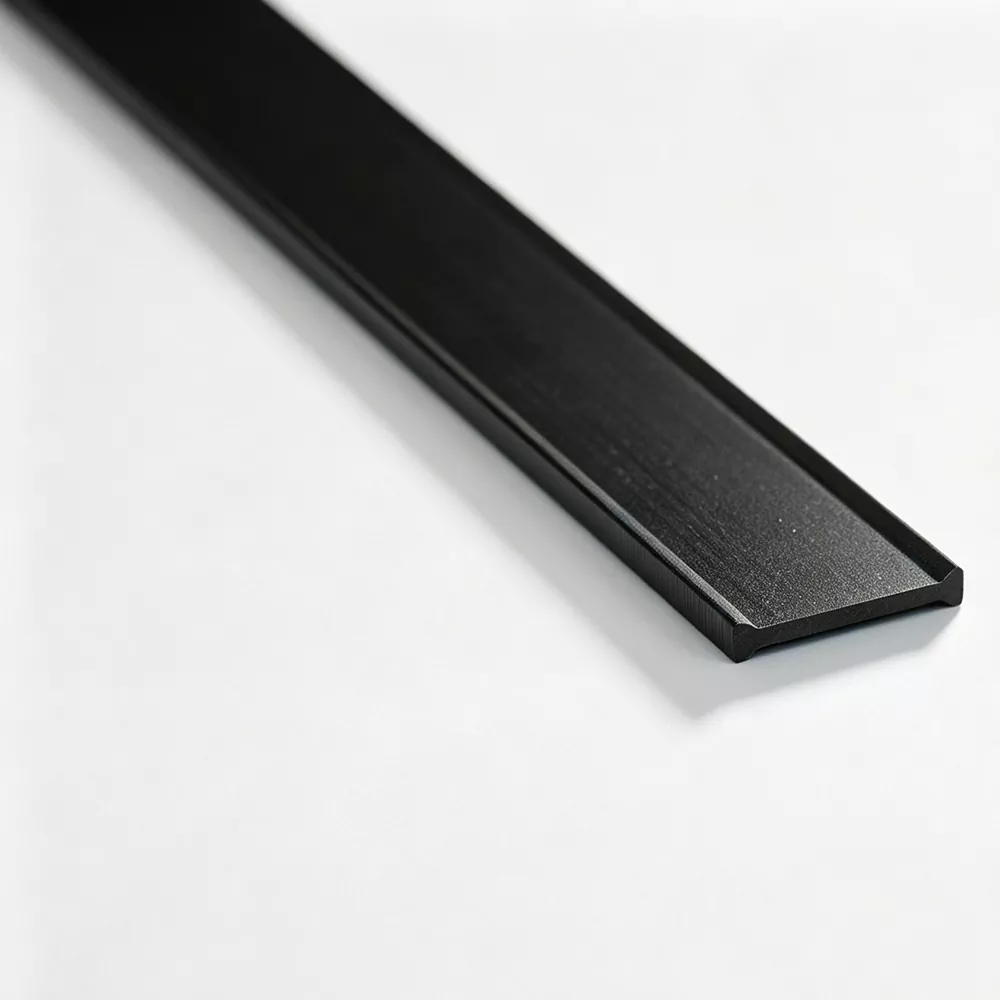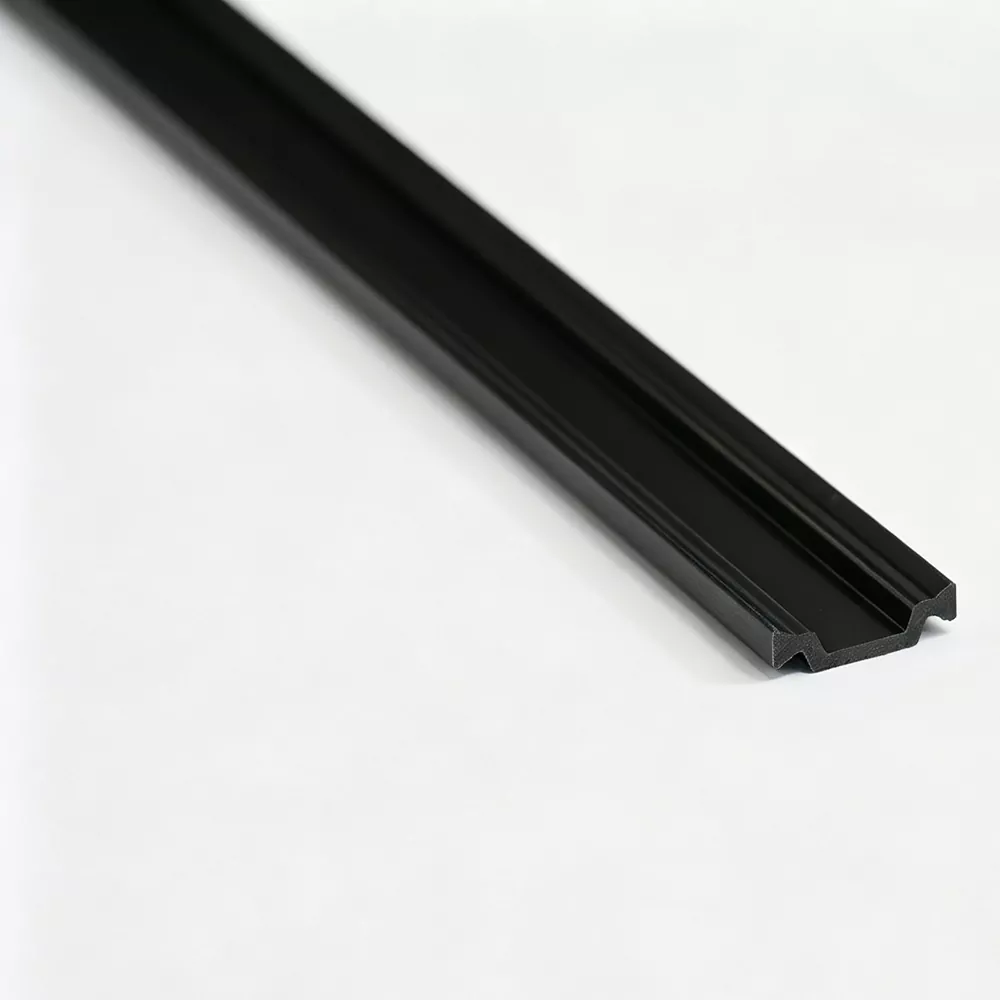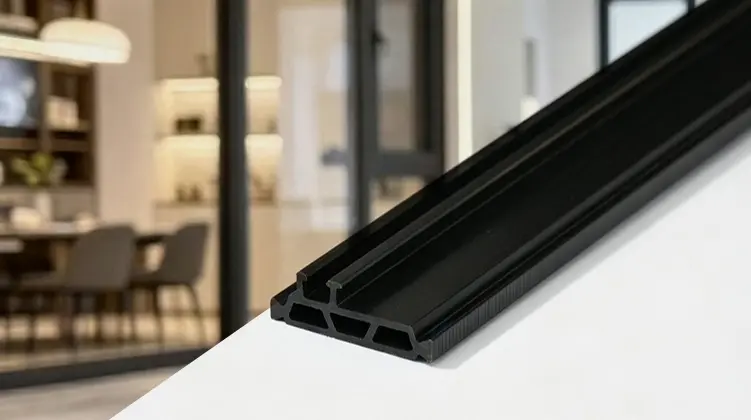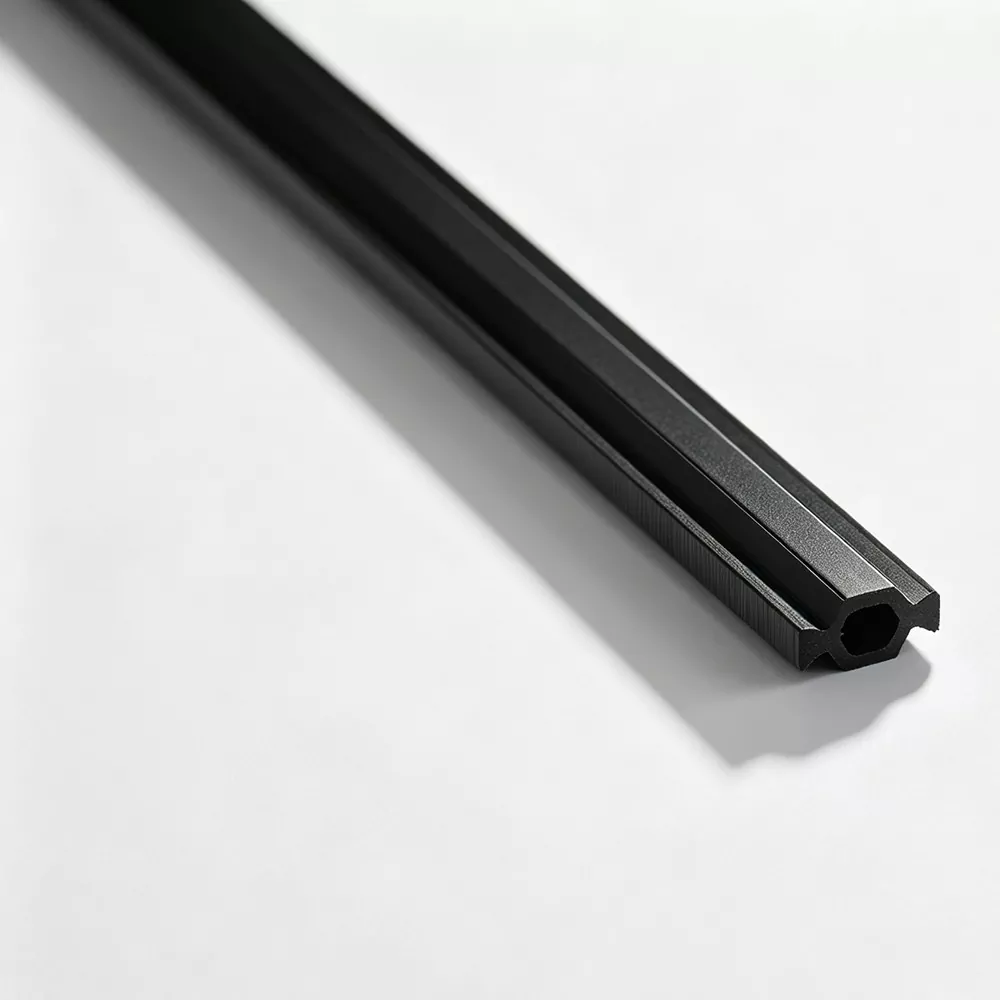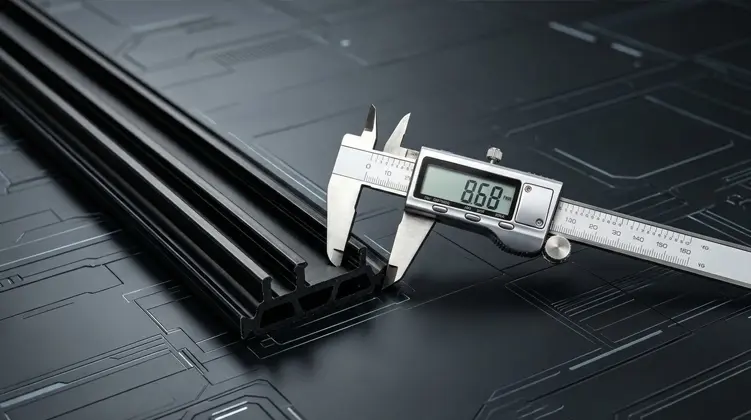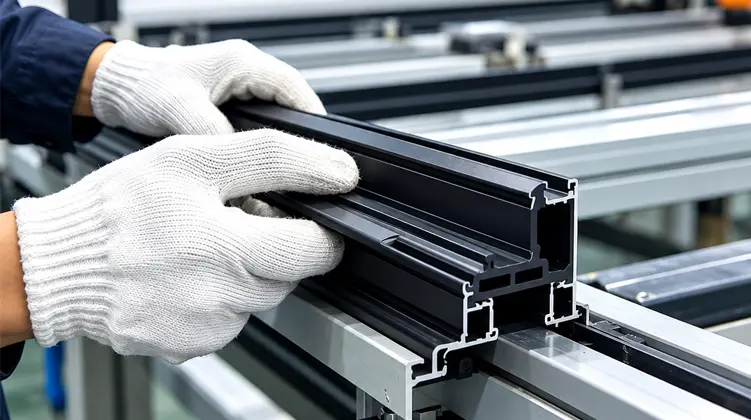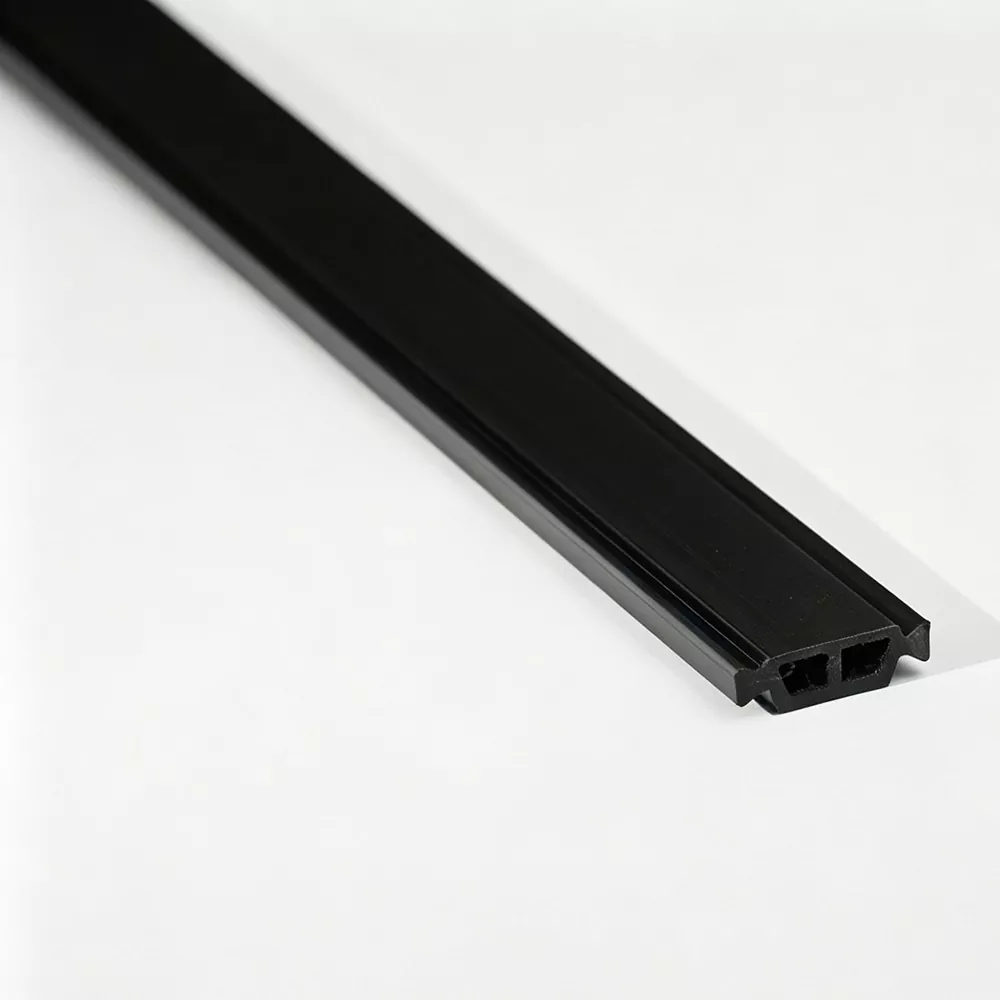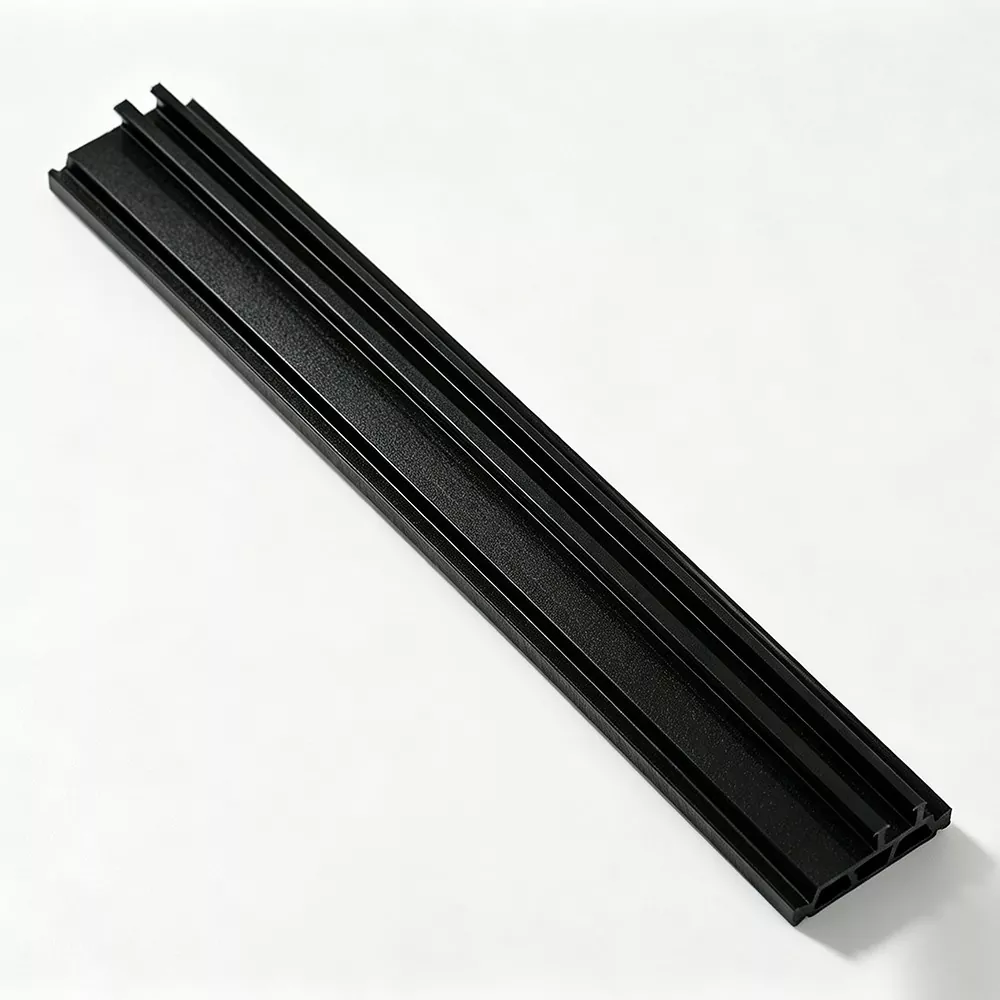
Polyamide Thermal Break Strips are important structural components in thermally broken aluminum window, door, and curtain wall systems. Their function is to separate interior and exterior aluminum sections while maintaining the mechanical connection required by the assembled profile. Material composition, glass-fiber reinforcement, cross-sectional geometry, dimensional stability, and manufacturing consistency all influence their suitability for a particular aluminum extrusion.
PA66 GF25 is widely used for these applications because glass-fiber reinforcement improves the rigidity and structural characteristics of the polyamide profile. However, selecting a suitable product involves more than identifying the polymer grade. Aluminum cavity dimensions, locking geometry, insertion conditions, rolling processes, thermal requirements, and quality inspection methods must also be considered. Understanding these factors helps window manufacturers, aluminum extrusion companies, and building material distributors identify appropriate profile specifications and evaluate customized solutions.
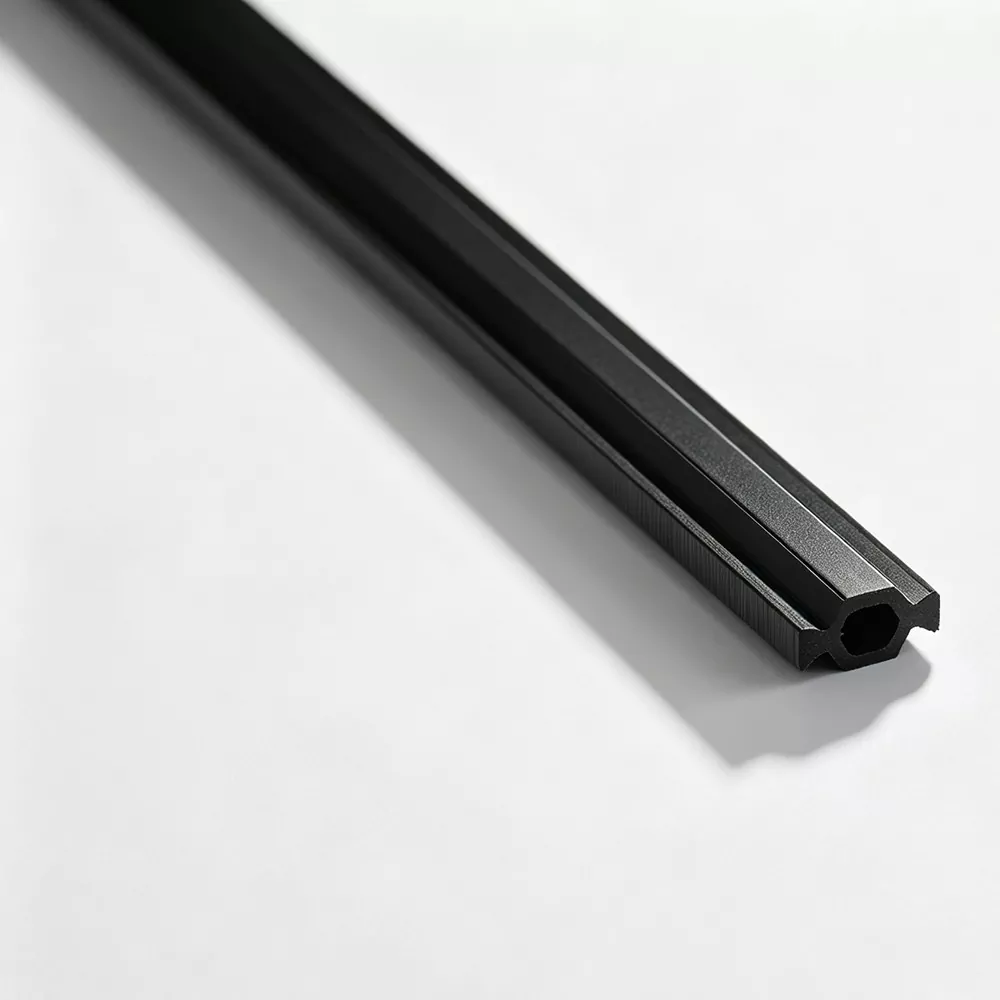
Choose a technical topic below to jump directly to its corresponding section.
Polyamide is an engineering thermoplastic used in applications that require a combination of mechanical strength, dimensional stability, and thermal insulation. Within architectural aluminum systems, it provides a non-metallic separation component between two aluminum profile sections.
Unlike a conventional aluminum connection, a thermally broken assembly introduces a lower-conductivity material between the interior and exterior metal sections. This changes the heat transfer path through the frame and helps reduce direct thermal bridging.
Polyamide 66, commonly identified as PA66 or nylon 66, is a polymer produced through the reaction of hexamethylenediamine and adipic acid. It is used in engineering components that require rigidity, wear characteristics, and dimensional consistency under defined operating conditions.
For aluminum thermal break applications, PA66 offers several relevant characteristics:
The polymer grade influences the behavior of the finished profile during manufacturing, installation, and service. Different material formulations can exhibit different levels of stiffness, moisture response, thermal expansion, and mechanical strength.
For this reason, material selection should be based on the actual requirements of the aluminum system. A generic plastic strip is not automatically an appropriate replacement for a profile designed around a specific polyamide formulation.
PA66 GF25 refers to polyamide 66 reinforced with 25% glass fiber by weight. This material combination is used in thermal break profiles because the reinforcement improves rigidity and structural stability compared with unreinforced polyamide.
In a thermally broken aluminum assembly, the strip must do more than create a barrier between metal sections. It must also maintain a stable mechanical connection when the aluminum profiles are assembled through insertion and rolling operations.
Glass fibers act as reinforcing elements within the polymer matrix. Their presence changes the mechanical behavior of the material and can improve stiffness, dimensional stability, and resistance to deformation under appropriate loading conditions.
For thermal break profiles, the reinforcement helps address several practical requirements:
Glass-fiber reinforcement increases material stiffness, supporting the structural requirements of the assembled aluminum profile.
The reinforced material helps maintain cross-sectional geometry during profile processing and service.
Material characteristics support the locking interaction between the polyamide section and aluminum cavity.
Controlled processing helps distribute reinforcement within the profile and maintain consistent product dimensions.
Glass-fiber orientation is an important factor in reinforced polyamide profile manufacturing. During extrusion, the flow of molten material influences how fibers are distributed and oriented within the finished cross-section.
Different fiber orientations can affect longitudinal strength and transverse shear resistance. Therefore, extrusion conditions should be managed according to the profile geometry and required mechanical characteristics.
Although the designation GF25 identifies a specific reinforcement proportion, it does not independently establish every performance characteristic of the finished profile. Resin quality, moisture condition, glass-fiber distribution, extrusion parameters, cooling, and dimensional control also influence the final product.
When evaluating a reinforced polyamide strip, technical teams should review the material specification together with relevant test results and the intended aluminum profile design.
Aluminum is widely used in architectural frames because of its strength, corrosion resistance, formability, and design flexibility. However, aluminum also has relatively high thermal conductivity. When interior and exterior aluminum sections are continuously connected, heat can travel through the metal frame.
A thermal break introduces a lower-conductivity material between these sections, interrupting the direct metal heat transfer path.
Thermal bridging occurs when heat moves through a building component along a path that conducts more readily than the surrounding materials. In an aluminum window frame, an uninterrupted metal connection can create such a path between indoor and outdoor environments.
By separating the aluminum sections, the thermal break changes the heat transfer characteristics of the frame. This can contribute to improved insulation performance and help reduce unwanted heat transfer through the window or door assembly.
The polyamide section is positioned between two aluminum extrusions. Each side engages with the corresponding aluminum cavity through a designed locking structure.
The assembled system combines three important functions:
The thermal break width affects the geometry of the separation zone. A wider separation can influence the overall heat transfer characteristics of the frame, but the result also depends on the complete profile design and surrounding components.
Engineers should therefore consider the strip width as part of the aluminum system rather than treating it as an independent insulation specification.
Mechanical performance is essential because a thermal break profile serves as part of the assembled aluminum structure. It must remain securely engaged within the extrusion and maintain its intended shape under the mechanical conditions of production and service.
Longitudinal tensile strength describes the material's resistance to tensile loading along the length of the profile. This property is relevant when evaluating the structural behavior of continuous polyamide sections.
Glass-fiber reinforcement and fiber orientation can influence this characteristic. Test results should be interpreted according to the specified material grade, sample preparation, and test method.
Transverse shear resistance is especially relevant to the interaction between the polyamide strip and the aluminum profile. The assembled section must resist forces acting across the thermal break connection.
Shear performance can be influenced by the locking geometry, engagement depth, profile dimensions, reinforcement distribution, and assembly conditions.
Shore hardness testing provides information about material resistance to indentation under a defined test method. Although hardness can help characterize a polymer, it should not be used as a substitute for tensile or shear testing.
Rigidity is also influenced by material composition and the geometry of the finished section. A profile with a complex cross-section may behave differently from a simple flat section made from the same polymer.
Thermal expansion, moisture absorption, and temperature changes can affect the dimensions of polyamide materials. These factors should be considered when matching the strip with aluminum cavities and defining assembly tolerances.
| Property | What It Describes | Why It Matters |
|---|---|---|
| Longitudinal Tensile Strength | Resistance to tensile loading along the profile. | Helps evaluate material strength in the extrusion direction. |
| Transverse Shear Strength | Resistance to forces acting across the profile connection. | Relevant to mechanical engagement in aluminum assemblies. |
| Shore Hardness | Resistance to indentation under a defined method. | Helps characterize the polymer material. |
| Linear Expansion | Dimensional change associated with temperature variation. | Important for dimensional matching and thermal conditions. |
| Water Resistance | Material behavior under specified water exposure conditions. | Relevant to dimensional and material evaluation. |
Cross-sectional geometry is one of the most important factors in thermal break profile selection. The strip must correspond to the cavity shape of the aluminum extrusion and provide the correct engagement after the assembly process.
Even when two products use the same PA66 GF25 material, differences in their cross-sectional structures may make them unsuitable for the same aluminum profile.
Width and thickness influence the physical fit of the strip within the aluminum cavity. Incorrect dimensions can cause insertion difficulties, loose engagement, or problems during rolling.
These measurements should be evaluated alongside the complete profile drawing. Nominal dimensions alone may not fully describe the functional fit of the locking section.
Some profile designs use a head-and-stem structure to position the polyamide strip within the corresponding aluminum groove. The head shape, stem width, and locking surfaces determine how the two components engage.
Other designs use straight or stepped structures that correspond to different cavity configurations.
Some thermal break designs incorporate toothed or textured engagement surfaces. These structures are developed around the aluminum pocket and rolling process to support mechanical interlocking.
The geometry must be matched with the corresponding extrusion design. A knurled profile is not automatically interchangeable with a smooth profile of similar dimensions.
| Design Feature | Primary Function | Matching Requirement |
|---|---|---|
| I-Type | Straight profile structure. | Corresponding straight aluminum grooves. |
| C-Type | Curved or stepped section configuration. | Matching cavity shape and locking dimensions. |
| T-Type | Head-and-stem positioning and engagement. | Aluminum groove designed for T-shaped geometry. |
| Special-Shaped | Non-standard section integration. | Customer drawings and specific extrusion geometry. |
Different aluminum extrusion systems use different cavity structures. The corresponding polyamide profile must match these structures to achieve proper insertion, positioning, and mechanical engagement.
I-Type profiles have a relatively straightforward cross-sectional structure. They are used with aluminum extrusions designed with corresponding straight thermal break grooves.
Depending on the extrusion, the required profile may vary in width, thickness, and engagement dimensions. Accurate measurement is important because small dimensional differences can influence the assembly process.
C-Type profiles are designed for aluminum sections with matching curved or stepped cavities. Their cross-sectional shape corresponds to the particular locking structure of the extrusion.
When selecting a C-Type section, engineers should check the cavity geometry, engagement surfaces, and dimensions rather than relying on the profile name alone.
T-Type sections use a defined head-and-stem structure. The head provides the required positioning geometry, while the stem connects the two sides of the thermal break assembly.
The profile must be developed according to the corresponding aluminum groove so that the head and stem engage correctly during assembly.
Some aluminum systems use non-standard cavities that cannot be matched with conventional profile shapes. Special-shaped sections can be developed according to technical drawings or physical profile references.
Customization may involve the cross-section, width, thickness, locking features, color, and cutting length. The design should be checked against the intended insertion and rolling process.
Dimensional compatibility is essential when integrating a polyamide profile into an aluminum extrusion. The strip must fit the designed cavity and maintain appropriate engagement throughout the assembly process.
| Aluminum Profile Parameter | Related Polyamide Specification | Technical Purpose |
|---|---|---|
| Cavity Width | Strip Width | Ensures appropriate dimensional matching. |
| Cavity Depth | Profile Height | Supports correct positioning and engagement. |
| Groove Geometry | Locking Section | Matches the mechanical connection structure. |
| Thermal Break Space | Strip Thickness | Defines the separation geometry. |
| Assembly Method | Profile Tolerance and Shape | Supports insertion and rolling compatibility. |
| Required Profile Length | Straight or Coiled Supply | Matches production and handling requirements. |
The polyamide profile must enter the aluminum cavity according to the intended assembly procedure. Excessive dimensional interference may create insertion difficulties, while insufficient engagement may affect the connection after rolling.
Insertion behavior can also be influenced by surface condition, extrusion tolerances, profile straightness, and the condition of the assembly equipment.
During rolling, the aluminum profile is mechanically formed around the thermal break section to establish the final connection. The polyamide geometry must correspond to the required rolling conditions and locking structure.
Cracking, incomplete engagement, or insufficient shear strength may indicate a mismatch involving the material, profile design, dimensions, or assembly parameters. Such problems should be evaluated systematically rather than attributed to one factor without inspection.
Cross-sectional measurements should be checked against the agreed product drawing. Relevant dimensions include overall width, height, thickness, locking details, and other functional surfaces.
For customized profiles, dimensional tolerances should be established during the development stage so that both the polyamide strip and aluminum extrusion can be evaluated against the same technical requirements.
Manufacturing consistency is essential because the finished profile must maintain its specified material characteristics and cross-sectional dimensions. The process involves several connected stages, from raw material preparation to extrusion, cooling, shaping, and final cutting.
PA66 resin and glass fiber are prepared according to the required material formulation. Incoming material batches are checked for relevant characteristics, including melt flow index, glass-fiber content, and moisture.
Moisture control is particularly important when processing polyamide. Material conditioning and preparation should follow the requirements of the selected resin and extrusion process.
The polymer and reinforcement components are prepared for controlled processing. Uniform material feeding helps maintain consistency throughout extrusion.
For reinforced materials, the processing method should account for the effect of extrusion conditions on glass-fiber distribution and orientation.
Extrusion is used to produce continuous polyamide profiles with the required cross-sectional shape. Parallel twin-screw extrusion lines can support controlled processing of reinforced polymer materials.
Important process parameters include:
After extrusion, the profile passes through cooling and shaping equipment to stabilize its cross-sectional dimensions. Cooling conditions and calibration are important for maintaining the required geometry.
Uneven cooling or unstable pulling conditions may contribute to dimensional variation. Process monitoring helps maintain consistency during continuous production.
Finished profiles can be supplied as standard straight strips or processed to specific lengths. Depending on the product requirements, additional operations may include end chamfering and laser coding.
Final processing should preserve the profile geometry and surface condition required for the intended aluminum assembly.
Each stage contributes to the finished profile. A stable production process should combine appropriate raw material control, extrusion parameter management, cooling, dimensional measurement, and finished-product inspection.
Quality inspection should cover both material characteristics and finished profile dimensions. Relying exclusively on visual inspection may not identify differences in mechanical performance, moisture response, or thermal aging behavior.
Raw material inspection helps establish whether incoming batches meet the required processing and formulation conditions. Relevant checks can include melt flow index, glass-fiber content, and moisture level.
Cross-sectional dimensions and surface condition should be checked during production at defined intervals. Recording relevant process parameters and inspection results supports production traceability and helps identify dimensional deviations.
Depending on the applicable requirements, laboratory evaluation can cover several material and performance characteristics.
| Test Item | Evaluation Focus | Technical Relevance |
|---|---|---|
| Density | Material density under a defined test method. | Supports material characterization. |
| Shore Hardness | Resistance to indentation. | Helps characterize material hardness. |
| Longitudinal Tensile Strength | Tensile behavior along the profile direction. | Evaluates longitudinal mechanical properties. |
| Transverse Tensile Strength | Tensile behavior across the profile direction. | Provides additional information about reinforced material behavior. |
| Water Resistance | Material response to specified water exposure. | Supports moisture-related evaluation. |
| Thermal Aging | Property changes after controlled thermal exposure. | Helps assess material behavior under elevated temperatures. |
| Linear Expansion | Dimensional change with temperature. | Relevant to thermal dimensional stability. |
Before shipment, finished profiles should be inspected for appearance and dimensions. The inspection should correspond to the confirmed product specification and agreed requirements.
Inspection records help connect the finished goods with their product references and production information. An English inspection report can also support communication between manufacturers, distributors, and international customers.
For aluminum extrusion manufacturers, even small dimensional differences can affect insertion and rolling conditions. Consistent inspection helps identify deviations before the profile reaches the assembly stage.
Quality evaluation should therefore include incoming material, in-process production, laboratory testing where applicable, and finished-product checks rather than relying on a single final visual inspection.
Thermal break profiles are used in architectural aluminum systems where interior and exterior metal sections need to be separated while maintaining a mechanical connection. Their application depends on the aluminum system design, structural requirements, and specified thermal performance.
Thermally broken aluminum window frames and sashes use polyamide sections to separate the interior and exterior aluminum components.
The strip must match the frame and sash extrusion geometry, including the required cavity dimensions and locking surfaces. Its material and cross-section should also correspond to the intended assembly method.
Door systems use thermal break profiles to create separation within aluminum frame and sash structures. The connection must remain mechanically stable while accommodating the dimensions and configuration of the door extrusion.
Selection should consider the door profile's cavity shape, strip engagement, and the relevant structural requirements.
In curtain wall applications, thermal break profiles can be used in mullions, transoms, and other thermally separated aluminum sections.
These systems may have different cross-sectional requirements depending on the curtain wall design. The polyamide section should therefore be matched with the specific extrusion rather than selected solely according to the general application name.
Some architectural systems use non-standard aluminum cavities, special locking structures, or unusual thermal break dimensions. Customized polyamide sections can be developed to correspond to these designs.
Separate interior and exterior aluminum sections within thermally broken window assemblies.
Provide a thermal separation component within aluminum door profile structures.
Support thermally separated structural aluminum sections in facade systems.
Match non-standard cavities and customized extrusion requirements.
Across these applications, the most important selection factors remain the same: material specification, cross-sectional geometry, mechanical engagement, dimensional accuracy, and compatibility with the complete aluminum profile system.
Standard thermal break sections cover many common aluminum extrusion designs. However, different extrusion manufacturers may use different cavity dimensions, locking geometries, and assembly conditions. A customized section can address these non-standard requirements.
An aluminum profile drawing provides essential information about the cavity, dimensions, and locking structure. Engineers can use this information to evaluate the required polyamide cross-section and identify potential dimensional conflicts.
A physical aluminum profile can provide additional information when drawings are incomplete or when actual extrusion dimensions need to be verified.
The evaluation should focus on the cavity width, depth, groove geometry, locking surfaces, and intended insertion and rolling conditions.
A structured development process helps connect the aluminum extrusion design with the finished polyamide profile. Each stage should be reviewed before moving to the next production step.
An aluminum extrusion drawing or physical profile, required dimensions, locking structure, material specification, color, and assembly method provide a practical starting point for technical evaluation.
Choosing a suitable profile requires coordination between material requirements and aluminum extrusion design. A product that meets the required material category may still be unsuitable if its dimensions or engagement structure do not match the intended assembly.
Start with the intended window, door, curtain wall, or architectural extrusion system. Identify the specific aluminum profile and determine whether the thermal break is installed in a straight, curved, stepped, or special-shaped cavity.
Determine whether the application requires PA66 or reinforced PA66 GF25. Review the relevant mechanical and material requirements rather than assuming that all polyamide formulations have identical characteristics.
Check cavity width, depth, strip thickness, locking geometry, and other functional dimensions. Confirm the relevant tolerances and how they relate to the aluminum extrusion.
Evaluate longitudinal tensile strength, transverse shear strength, hardness, and other applicable mechanical properties. The required values should be based on the intended system and relevant technical specifications.
Consider insertion, rolling, cooling, and profile handling requirements. The strip must correspond to the actual production process rather than only the nominal dimensions shown on a drawing.
Confirm which dimensional and laboratory tests are relevant to the product. Inspection frequency, testing methods, documentation, and acceptance criteria should be established according to the agreed specification.
| Selection Category | Information to Confirm |
|---|---|
| Material | PA66 or PA66 GF25 and applicable material requirements. |
| Profile Type | I-Type, C-Type, T-Type, or customized cross-section. |
| Dimensions | Width, thickness, height, cavity depth, and tolerances. |
| Mechanical Properties | Tensile strength, shear resistance, and hardness requirements. |
| Thermal Properties | Thermal conductivity and dimensional behavior requirements. |
| Assembly Method | Insertion, rolling, and mechanical engagement conditions. |
| Surface and Color | Appearance, color, and any special finishing requirements. |
| Supply Form | Straight strips, coiled profiles, or specified cut lengths. |
| Quality Documents | Dimensional records, inspection results, and applicable test reports. |
Profile length and packaging should also correspond to the customer's production arrangement. Standard straight strips can be supplied at 6 meters per piece, while suitable coiled profiles can be supplied at 500 meters per roll.
The appropriate supply form depends on the profile geometry, handling requirements, storage conditions, and downstream assembly process. Special cutting lengths and packaging arrangements can be confirmed according to the product configuration.
For manufacturers evaluating Polyamide Thermal Break Strips, a complete technical specification is more useful than selecting a product based only on its nominal width or material name. Matching the actual aluminum cavity, reinforcement requirements, and assembly process provides a more reliable basis for product selection.
Explore answers to common questions about polyamide materials, PA66 GF25, profile structures, manufacturing, and aluminum system compatibility.
They are engineering polymer profiles installed between separate aluminum sections to provide thermal separation within thermally broken window, door, and curtain wall systems. They also maintain a mechanical connection between the aluminum components.
PA66 GF25 is polyamide 66 reinforced with 25% glass fiber by weight. The reinforcement improves rigidity and dimensional stability and supports the mechanical requirements of aluminum profile assembly.
Glass fiber increases the stiffness and structural characteristics of the polyamide material. Its distribution and orientation during extrusion can influence longitudinal strength and transverse shear resistance.
I-Type profiles have a straightforward section for matching straight aluminum grooves. C-Type profiles correspond to curved or stepped cavities, while T-Type profiles use a head-and-stem structure. The correct type depends on the actual aluminum extrusion geometry.
They separate the interior and exterior aluminum sections with a material that has lower thermal conductivity than aluminum. This interrupts the direct metal heat transfer path and changes the thermal behavior of the assembled frame.
Not automatically. Their mechanical characteristics differ because glass-fiber reinforcement changes the material's stiffness and dimensional behavior. Selection should follow the aluminum system design and the required material specification.
Important dimensions include strip width, height, thickness, cavity depth, and locking geometry. The aluminum profile drawing or physical extrusion should be used to confirm the required cross-section and dimensional tolerances.
Yes. Non-standard cross-sections can be developed according to aluminum extrusion drawings or physical profile references. Customization can include dimensions, locking structures, colors, cutting lengths, packaging, and laser coding.
Possible factors include dimensional mismatch, incorrect cavity geometry, profile tolerances, surface condition, material characteristics, and assembly equipment settings. The complete profile and production process should be evaluated to identify the cause.
Depending on the applicable requirements, testing may include density, Shore hardness, longitudinal and transverse tensile strength, water resistance, thermal aging, and linear expansion. Dimensional and surface inspections are also important during production.
Yes. Standard straight profiles can be supplied at 6 meters per piece, and suitable coiled profiles can be supplied at 500 meters per roll. Specific cutting lengths can also be arranged according to the product and processing requirements.
An aluminum extrusion drawing or physical profile, required dimensions, locking structure, assembly method, material specification, and color requirements are useful starting points for technical evaluation and profile development.
Yes. Polyamide profiles can be integrated into curtain wall mullions, transoms, and other thermally separated aluminum sections. Their cross-sectional dimensions and mechanical engagement must match the specific curtain wall extrusion design.
From PA66 GF25 standard sections to customized I-Type, C-Type, T-Type, and special-shaped profiles, we provide profile solutions developed around aluminum extrusion dimensions, mechanical engagement, and manufacturing requirements.
Explore Our Polyamide Profile Range
Contact us to Discuss Your Profile RequirementsFinal material selection, dimensional tolerances, assembly conditions, and thermal performance should be evaluated according to the specific aluminum extrusion system and applicable technical requirements.